under the dual requirements of environmental protection and energy efficiency, taiwan's server industry will accelerate its transformation towards green data centers in the next five years. this article focuses on the key points of green data center construction, combined with trend predictions, to provide practical suggestions, which is suitable for decision-makers and technical teams to refer to.
the taiwanese government and local authorities have gradually tightened their policies on carbon reduction and energy efficiency. it is expected that relevant regulations and incentives in the next five years will push companies to accelerate infrastructure upgrades and adopt higher standards of energy efficiency goals.
as the proportion of renewable energy increases, green power integration becomes the core of data center design. taiwan's server companies should plan to collaborate with power grids and power suppliers to prioritize the purchase of traceable renewable electricity and improve power consumption flexibility.
reducing pue is still an important indicator for measuring green data centers. by optimizing it load distribution, modular computer room design and efficient power architecture, taiwan's server facilities can achieve stricter energy efficiency benchmarks within five years.
cooling systems are energy consumers. combining natural cooling, liquid cooling guidance and heat recovery technology can significantly reduce air conditioning energy consumption. taiwan’s geographical and climatic characteristics also make coastal and mountain cooling strategies one of the site selection considerations.
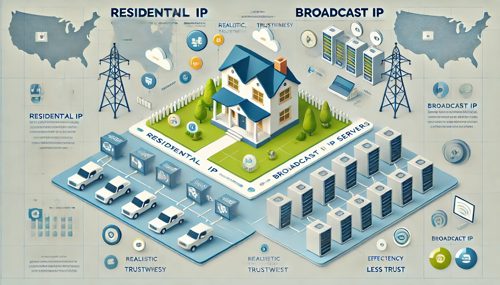
improving server energy efficiency includes using efficient power supplies, virtualization, resource pooling and elastic workload scheduling. the collaborative optimization of hardware and software can achieve significant improvements in unit computing energy consumption, which is in line with the goals of green data centers.
edge data centers can reduce energy consumption and delays caused by long-distance transmission. taiwan's server deployment will tend to focus on both centralization and edge, improving service efficiency and strengthening regional supply resilience through distributed architecture.
combining local renewable energy and energy storage systems can improve power supply continuity and flexibility. energy storage solutions play a key role in balancing peak loads and providing backup power, helping data centers achieve low-carbon operations.
basic data center monitoring and ai-driven operation and maintenance (dcim, energy consumption analysis) can achieve refined management. real-time energy consumption monitoring and predictive maintenance not only reduce the risk of failure, but also continuously optimize energy efficiency performance.
site selection requires a combination of power availability, cooling resources, natural disaster risk and land use regulations. proper site planning and building energy efficiency design can reduce environmental impacts and improve long-term operational efficiency.
green renovation and new construction investment require innovative financing and business models. using long-term power purchase contracts, cooperation with energy service companies or green financing instruments can reduce initial costs and share energy savings benefits.
the construction and operation of green data centers requires cooperation between cross-disciplinary talents and institutions. strengthening collaboration with power units, academic research institutions and system integrators can accelerate technology introduction and capability development.
while promoting energy efficiency and environmental protection measures, service availability and information security must be ensured. redundant design, disaster recovery strategies and network security measures cannot be compromised for energy conservation and should be planned simultaneously.
looking forward to taiwan's server industry in the next five years, green data centers will become the mainstream of the industry. it is recommended to establish a phased energy efficiency roadmap, prioritize the integration of renewable power and energy storage, introduce intelligent operation and maintenance tools, and strengthen cross-border cooperation to take into account environmental protection, cost and reliability.
- Latest articles
- Cloud Singapore Server Selection Guide Meets Global Deployment Needs From Bandwidth To Availability Zone
- A Must-read Cloud Server For Newbies: Vietnam’s Billing Model And Selection List
- Full Process Guide For Purchasing And Performance Optimization Of VPS With Japanese Native IP
- An Explanation Of Vietnam’s Native Residential IP Pool Management And IP Rotation Strategies From The Perspective Of A Service Provider
- When Selecting Locations For Cloud Service Implementation, Consider Network Latency And Bandwidth Conditions In Computer Rooms In India And Germany.
- How To Buy A US VPS With Bitcoin While Protecting Anonymity And Compliance Risks
- Vps Cambodia Connection Domestic Access Speed Optimization And Node Selection Suggestions
- Main Points Of Fault Recovery And Multi-line Redundancy Design Of Hong Kong Telecom’s Direct-connected Computer Room
- Malaysia Vps Recommends Unlocking The Best Node And Configuration Guide For TikTok
- Step-by-step Implementation Of Korean Server And Chinese Email And Log Localization Settings
- Popular tags
-
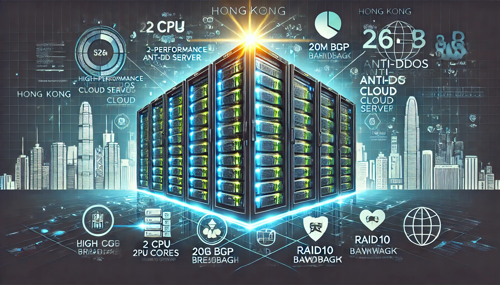
How To Quickly Solve The Problem Of Not Being Able To Log In To The Taiwan Server
this article introduces how to quickly solve the problem of not being able to log in to the taiwan server, helping users to efficiently troubleshoot and solve common network problems. -
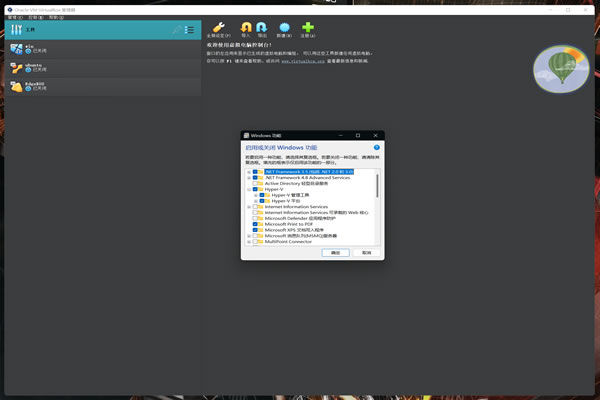
Availability Monitoring: Real-time Status Detection Method Of Taiwan Airport Native IP Node
This article introduces the availability monitoring and real-time status detection methods for Taiwan Airport's native IP nodes, covering node identification, connectivity detection, distributed monitoring, alarm mechanisms and compliance precautions, to facilitate service availability and problem location efficiency. -

The Best Choice For Circumventing The Firewall: Advantages And Applications Of Taiwanese Servers
explore the advantages and applications of taiwanese servers in circumvention, and learn how to use their features to achieve safe and efficient network access.