
in "research on server room resource scheduling and elastic expansion strategies of wuhai and hong kong station clusters", this article focuses on the practices and methods of server room resource allocation, load balancing and availability improvement in wuhai and hong kong station clusters. combining geographical positioning optimization and seo/geo requirements, a feasible scheduling model and capacity expansion strategy are proposed, taking into account cost-effectiveness and service stability, and suitable for reference by cross-regional station group operation teams and operation and maintenance engineers.
current situation and main challenges
currently, the wuhai and hong kong station clusters face challenges such as multi-source traffic fluctuations, differences in bandwidth delays, and fragmentation of computer room resources. cross-regional regulations and data sovereignty constraints increase deployment complexity and bring additional constraints to resource scheduling. effective scheduling and capacity expansion need to take into account latency, throughput, and disaster recovery capabilities while ensuring seo ranking and geographic search accuracy to avoid single-point bottlenecks and resource waste affecting the availability of the site group.
multi-dimensional resource scheduling strategy
resource scheduling should adopt a hybrid strategy based on priority and real-time indicators, combined with multi-dimensional weights of cpu, memory, network and storage. utilize traffic prediction and historical behavior models to dynamically adjust task affinity and instance allocation to ensure that popular pages and crawl traffic receive resources first. for seo/geo sensitive services, priority is given to deployment in computer rooms in target areas to reduce return-to-source delays and improve search engine crawling efficiency.
flexible expansion and reduction mechanism design
for elastic expansion, it is recommended to combine automatic scaling and reserved capacity strategies, and use a mixture of horizontal expansion and necessary vertical adjustment. it adopts a triggering mechanism that combines event-driven and prediction-driven to quickly expand capacity during burst traffic, while protecting core services through smooth load shedding and degradation strategies. the expansion strategy should be formulated synchronously with sla, cost constraints and search engine crawling windows to avoid jitter caused by frequent expansion and contraction.
cross-border network and computer room optimization
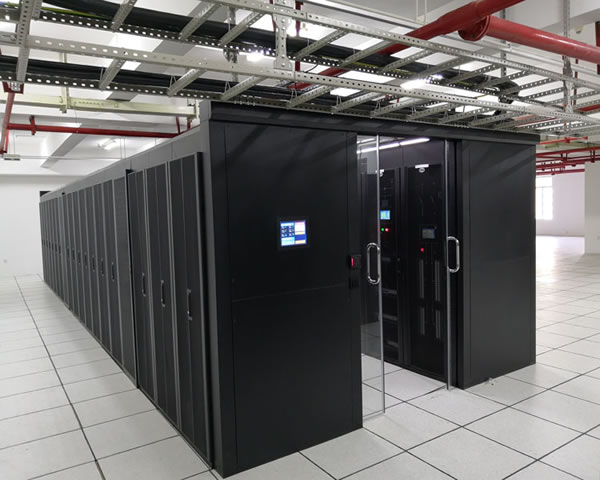
network optimization includes intelligent routing, cdn collaboration and multi-link redundancy, aiming to reduce cross-border access delays and improve availability. at the computer room level, we need to pay attention to power and cooling redundancy, physical security, and reasonable resource pool division, and improve the accessibility of target regions through nearby regional access and link switching mechanisms. a stable network and computer room environment play a significant role in improving geo search results and user experience.
monitoring, automation and decision-making closed loop
build a unified monitoring platform to collect business, system and user experience indicators, and combine thresholds and aiops to achieve anomaly detection and automated processing. infrastructure as code and operation and maintenance automation ensure that the expansion process is repeatable and auditable. monitoring and log data provide data support for traffic prediction, capacity expansion decisions and seo crawling behavior analysis, forming a closed loop of continuous optimization.
summary and implementation suggestions
summary: focusing on the "research on resource scheduling and elastic expansion strategies for wuhai hong kong station cluster server room", it is recommended to proceed in stages: first establish monitoring and prediction capabilities, then implement controllable automatic scaling and traffic scheduling, and finally optimize cross-border network and compliance strategies. through continuous data-driven adjustments, cross-regional site group operations that are search engine-friendly, cost-controllable, and highly available can be achieved.
- Latest articles
- Practical Guide And Advice On Choosing The Most Stable PUBG Server In South Korea
- How Does Cross-border Business Use Cloud Servers? Singapore Servers Improve Access Experience
- How To Enter The Vietnam Server Now? A List Of Graphic Steps And Common Misunderstandings That Even Beginners Can Understand.
- How Does An Enterprise Choose A Hosting Plan That Supports Multiple IPs For US Site Group Servers?
- Looking At The Stability And Compliance Requirements Of Cross-border Transactions From The Futian Hong Kong Station Group Server
- Evaluate The Compliance Certificate And Protection Capabilities Of US Cloud Rental Servers From A Security Perspective
- Purchasing Advice Hong Kong Vps Cloud Server 8 Core How To Choose The Appropriate Package According To Business Load
- Comparative Analysis Of Computer Room Distribution And Network Interconnection Performance Of Server Companies In Taiwan
- Cost Control Billing Model And Money-saving Tips For Taiwan’s Native IP Server Cloud Server
- Cost And Operation And Maintenance Perspective Differences Between Hong Kong Cn2 And BGP Comparison Of Procurement And Maintenance Costs
- Popular tags
-

The Importance Of Understanding The Phone Number And Service Quality Of Hong Kong Server Hosting Companies
this article explores the importance of phone and service quality of hong kong server hosting companies, and how to choose the right service provider. -
Hong Kong Silicon Cloud Server Evaluation And User Experience Sharing
This article shares the evaluation and user experience of Hong Kong silicon cloud servers, and discusses its performance, stability, security and cost-effectiveness. -

Advantages And Choice Suggestions For Hong Kong's Stable Cloud Server
This article discusses the advantages and selection suggestions of Hong Kong's stable cloud servers to help users make informed decisions.