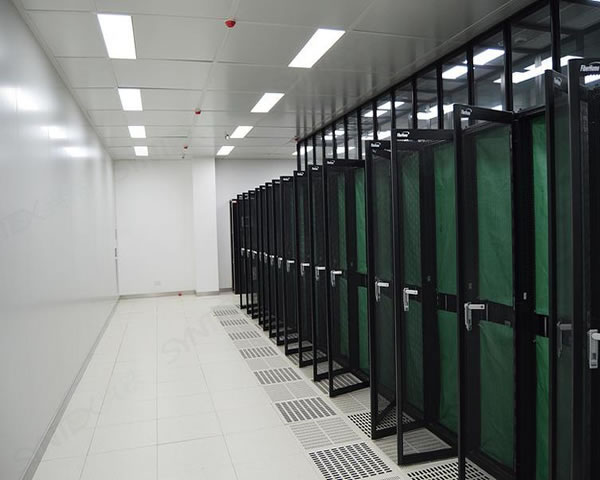
introduction: a summary of common troubleshooting and preventive measures for hosting servers in the united states, aiming to provide operation and maintenance and technical leaders with a structured troubleshooting process and executable prevention strategies to improve system stability and recovery speed. this article focuses on practical and verifiable methods, suitable for geo/seo query scenarios.
common hardware failures and overall troubleshooting process
hardware failure is one of the common causes in hosting environments. when troubleshooting, give priority to hardware alarms, temperatures, power supplies, and logs, and combine computer room consoles with remote management tools such as ipmi to locate problems from outside to inside, from the whole to components, to avoid data risks caused by blind restarts.
troubleshooting suggestions for hard drive and raid problems
disk failures often manifest themselves as i/o delays, file system errors, or array degradation. check smart information, raid controller logs and array status, prioritize read-only or snapshot protection, and replace and rebuild the array online if necessary to prevent data loss caused by concurrent failures.
diagnostic steps for memory and cpu abnormalities
memory or cpu abnormalities often cause system freezes or kernel crashes. use kernel logs, mcelog, dmesg, and monitoring alarms to determine whether it is caused by hardware. perform targeted memory tests, cpu stress tests, and motherboard and power supply checks to avoid misjudgment as software problems.
troubleshoot network connectivity and bandwidth issues
network issues are extremely common in hosting servers, manifesting as packet loss, high latency, or unreachability. when troubleshooting, we locate layer by layer from physical links and switch ports to routing tables and firewall policies. we also combine traceroute, ping, tcpdump and other tools to analyze traffic paths and packet loss points.
common troubleshooting for routing and dns
routing or dns configuration errors may cause domain name resolution to fail or the path to be blocked. check bgp/routing policies, default routes and nat rules, verify dns resolution links and ttls, and use online resolution detection and local dig/nslookup comparison to quickly locate the source of the problem.
bandwidth congestion and traffic analysis methods
bandwidth congestion usually comes from burst traffic or ddos attacks. analyze abnormal traffic sources by monitoring traffic baselines, traffic mirroring and netflow/sflow data, and combine rate limiting and traffic cleaning strategies to mitigate short-term and control traffic peaks at the root cause.
operating system and service level troubleshooting
interruptions caused by operating system or service abnormalities need to be analyzed from the perspective of logs, processes, and configurations. system logs, application logs and audit records are the primary information sources; combined with process status, number of open files and port monitoring status, the type of service exception can be quickly determined and restored.
best practices for log analysis and process troubleshooting
logs are the core of troubleshooting. it is recommended to collect and index in a centralized manner (such as elk/other centralized systems) and locate error stacks through keywords and time windows. analyze high-consuming processes and use tools such as strace and lsof to view system calls and resource usage.
automated update and patch management strategies
improper updates can cause cascading failures. adopt a phased, blue-green or rolling upgrade strategy to first verify patch compatibility in the test environment and then release it in batches in production. cooperate with rollback plans and change records to reduce risks caused by updates.
protection and troubleshooting of security incidents and abnormal access
security incidents can result in service unavailability or data leakage. intrusion detection, waf, and log auditing should be configured. once abnormal access is discovered, the affected host should be immediately isolated, evidence should be saved, and traceability analysis should be performed to prevent the spread of attacks and meet compliance and filing requirements.
intrusion detection and firewall policy troubleshooting points
firewall and intrusion detection configuration errors can cause false blocking or permitting. check the acl and rule priority, logs and policy effective time, and use simulated traffic to verify the effect of the rules to ensure that threats can be blocked without affecting legitimate business access.
troubleshooting suggestions for account and permission management
account abuse and permission errors often lead to security incidents. check recent permission changes, ssh keys and login records, enable the principle of least privilege, multi-factor authentication and regular audits, and promptly disable or recycle credentials that are no longer used.
summary of preventive measures and operation and maintenance best practices
prevention is better than repair. regular backups and drills, definition of monitoring indicators and alarm thresholds, capacity planning and automatic expansion strategies are core elements. combining sla and drill documents improves response speed and forms a reliable operation and maintenance closed loop and knowledge base.
summary and suggestions: this article "summary of common troubleshooting and preventive measures for hosting servers in the united states" covers the four major categories of hardware, network, system and security issues. it is recommended to establish comprehensive monitoring, log concentration, hierarchical troubleshooting process and change management system, and conduct regular fault drills and audits to improve availability and reduce operation and maintenance risks.

- Latest articles
- Popular tags
-

The Cost Performance And User Experience Of Infinite Cloud Us Server Hosting
discuss the cost performance and user experience of infinite cloud us server hosting, and help users choose suitable cloud server services. -
Business Case Showcasing Successful Examples Of Hong Kong VPS Cloud Servers In The US To Support Global Business Expansion
This business case demonstrates how Hong Kong VPS cloud servers and US-based nodes work together to help companies expand their global operations, offering replicable insights from technical architecture, deployment strategies to operations management and SEO optimization. -