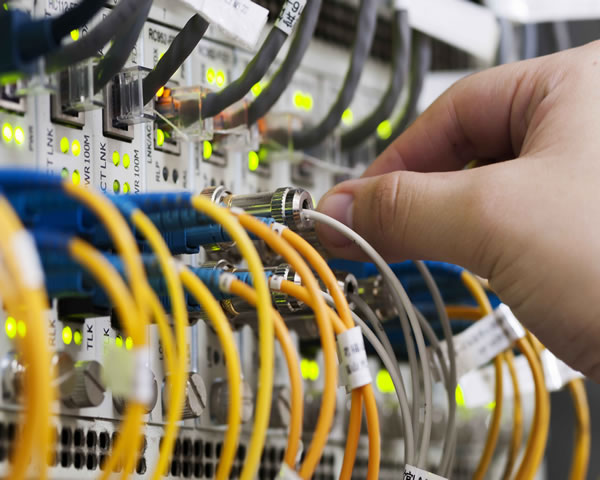
when choosing a high-defense us server rental, monitoring and alarming are the core components to ensure business continuity and security. this article focuses on "monitoring and alerting services that you should pay attention to when choosing high-defense us server rentals" and introduces key monitoring categories, alert mechanisms and linkage handling suggestions to help operation and maintenance and decision-makers evaluate supplier capabilities and optimize the protection architecture.
real-time traffic monitoring and visualization
high-defense server rental should first have real-time traffic monitoring and visualization capabilities, including bandwidth usage, traffic peaks, source/destination ip distribution and other indicators. the visual interface and charts help quickly determine attack patterns, identify abnormal traffic, and provide a basis for cleaning decisions. in addition, fine-grained traffic history data facilitates retrospective analysis and capacity planning.
multi-dimensional system and network indicator monitoring
monitoring should cover multi-dimensional indicators such as cpu, memory, disk i/o, network throughput, number of connections, and port status. by correlating host-layer and network-layer data, signs of resource bottlenecks or abuse can be identified earlier. a monitoring platform that supports custom thresholds and aggregated views is more conducive to the formulation of business-oriented monitoring strategies.
anomaly detection and behavior analysis capabilities
in addition to threshold alarms, choosing monitoring with anomaly detection and behavioral analysis capabilities can detect low-frequency or progressive attacks, such as slow connections, abnormal traffic distribution, or sudden session growth. anomaly identification based on statistical models or rule engines provides early warnings with fewer false positives, making it easier to take preventive measures in advance or expand monitoring scope.
alarm policy settings and multi-channel notifications
a complete alarm strategy should support multi-level alarms, suppression rules and alarm merging to reduce alarm storms and false alarm interference. notification channels should include email, text messages, webhooks, api callbacks, and integration with common collaboration platforms to ensure that relevant personnel can be informed of and respond to alarms in a timely manner in different scenarios.
automated response and emergency handling capabilities
prefer monitoring platforms that support automated responses, such as triggering traffic restrictions, black and white list updates, temporary bans, or traffic cleaning requests based on rules or scripts. automation reduces manual response time and can mitigate the impact of attacks in the early stages, but should also provide human intervention channels to deal with complex or misdiagnosed situations.
log management, persistence and audit trails
complete log management includes access logs, system logs, network traffic logs and alarm event records, and the persistence and retrieval of logs should be ensured. the audit link is crucial for post-event analysis, accountability tracing and compliance requirements. it is recommended to evaluate the supplier's log retention time and export capabilities.
linkage capabilities with cleaning services and protection strategies
the monitoring and alarm system should be able to link with ddos cleaning, traffic scheduling and firewall policies to quickly trigger cleaning or policy issuance when abnormalities are detected. the linkage capability determines the overall delay from detection to mitigation, and is an important dimension to measure the maturity of high-defense us server rental services.
reporting, sla metrics and compliance support
when choosing, you should pay attention to the reporting capabilities, sla visualization and availability statistics provided by the monitoring platform, such as attack event records, response time and recovery status. under compliance requirements, the integrity of data access and alarm records is of great value to audits and risk assessments, and should be clarified in contracts and technical details.
summary and suggestions: when evaluating high-defense us server rental, monitoring and alarming should be considered as core considerations in procurement and operation and maintenance. give priority to solutions with real-time traffic visualization, multi-dimensional indicator coverage, intelligent anomaly detection, multi-channel alarms, automated response, log auditing and cleaning linkage capabilities. at the same time, terms such as sla and log retention should be clarified in the contract, and emergency procedures should be verified through drills to ensure that actual protection and monitoring capabilities meet business needs.
- Latest articles
- Popular tags
-

Why Choosing A Professional US Server Hosting Service Is A Wise Move
This article discusses why it is wise to choose a professional US server hosting service and analyzes its advantages in security, performance, technical support, etc. -

Leverage WAF And U.S.-based High-security Server Hosting To Provide Dual Protection At Both The Application Layer And Network Layer
This article explores how to combine a WAF with U.S.-based high-security server hosting to achieve dual protection at both the application layer and network layer. It covers architecture design, deployment strategies, log monitoring, and compliance considerations, making it suitable for optimizing service security for users in the United States and around the world. -

Service Quality Evaluation Of Hat Cloud American High-defense Server
This article will conduct in-depth evaluation of the service quality of Hat Cloud's American high-defense server, including its performance, stability, security and customer support.