in the process of building cloud servers in malaysia, taking "security first" as the core design principle can significantly reduce risks. this article focuses on the key points of network and permission setting, and combines network segmentation, access control, identity and credential management, auditing and operation and maintenance suggestions to provide practical security implementation ideas that are suitable for local regulations and cloud platform environments.
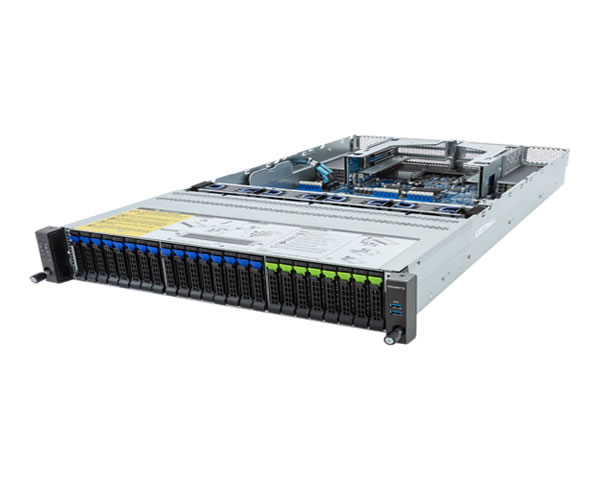
regional hosting and compliance requirements increase the security sensitivity of data and business. prioritizing security avoids data breaches, business disruption, or compliance penalties. planning the network and permissions in advance can reduce the cost of later changes, lay the foundation for continuous auditing, backup and disaster recovery, and ensure that online services are stable and controllable.
when designing vpcs and subnets, they should be segmented according to responsibilities: the public network load layer, application layer and database private layer should be separated. use routing tables, subnet acls, and private ips to achieve minimal exposure and avoid placing the management interface directly on the public network. properly design the subnet cidr and reserve expansion space to improve maintainability and security.
firewalls and security groups should be based on whitelists, with precise authorization by service and port, and prohibit unnecessary inbound traffic. it implements end-to-end connection tracking and status detection, combines rate limiting and abnormal connection monitoring, and cooperates with ddos basic protection and application layer waf to reduce external attack surfaces.
management access should be through an enterprise vpn or dedicated connection, and critical operations and maintenance should be centrally controlled through a bastion/springboard host, with operations logged and forced use of multi-factor authentication and key login. disable direct ssh/rdp to public network hosts, change keys regularly and limit source ips.
enforce role-based access control (rbac) and the principle of least privilege, grant temporary permissions by job responsibility and use permission curve review. enable multi-factor authentication (mfa) and single sign-on (sso) for management console and api access, and set approval processes and alerts for key permission changes.
all keys, credentials and certificates should be centrally managed and stored encrypted, using short-lived credentials and an automatic rotation strategy. enable operation logs and network traffic logs, centrally aggregate them into log management and siem systems, and configure alarms and regular audits to ensure traceability and rapid response to abnormal behaviors.
follow local data sovereignty and privacy regulations, formulate data classification and backup strategies, and conduct regular vulnerability scans and penetration tests. automated patch management, container and image security scanning, and disaster recovery drills are necessary measures to ensure long-term stability and form a closed-loop security operation and maintenance process.
when building cloud servers in malaysia , network and permission settings are the cornerstone of protection. it is recommended to simultaneously promote network segmentation, strict firewalling, secure access, minimum permissions and credential management, and cooperate with log auditing and compliance inspections to continuously optimize to deal with dynamic threats.
- Latest articles
- Deployment Guide: Getting Started from Scratch and Completing High-Availability Architecture Design with Vietnamese CN2 Service Providers
- Evaluation of performance and scalability based on technical specifications in the U.S. standalone server price list
- Network latency and bandwidth metrics that must be considered when choosing native IPs from Vietnam and Hong Kong
- Quick Start Guide to Deploying Hong Kong CN2 Lightweight Cloud from Scratch
- Practical Operations: Server Monitoring, Alerts, and Automated Operations for Korean Cloud Services
- Case Study: How a Website Group Boosts Cross-Border Conversion Rates in Korean E-Commerce
- Network providers and routing testing methods to check before purchasing a Japanese dial-up VPS
- Design approach for building a multi-region disaster recovery system using Malaysian VPS CN2 GIA
- Game optimization suggestions: Optimization steps for Dota 2 auto-chess servers that keep using Taiwanese settings
- Practical tips to help you reduce server rental costs in Cambodia: A comparison of long-term and short-term rentals
- Popular tags
-

Analysis of the characteristics and usage scenarios of Malaysian node VPS
This article discusses the characteristics and applicable scenarios of Malaysian node VPS to help users choose the right server solution. -
Essential Reading Before Enterprise Deployment: Malaysia VPS Trial Scenarios and Security Recommendations
A guide to trying out Malaysian VPS for businesses, covering common use cases, performance and bandwidth evaluation, network and compliance considerations, as well as practical security advice to help with decision-making before deployment and preparation for going live. -
malaysia cloud server recommendation and comparison in 2023
recommendation and comparison of malaysian cloud servers in 2023, analyzing the performance, price and services of different cloud servers, and providing a reference for users to choose appropriate cloud servers.