In cross-border access scenarios, selecting the appropriate German paper airplane server node and implementing latency control strategies are key to improving the user experience. This article provides actionable optimization recommendations regarding network topology, routing reachability, bandwidth, and protocol overhead, to help engineering teams reduce cross-border latency and packet loss risks while ensuring stability.
Latency in cross-border access stems from propagation delay, queueing delay, and processing delay, with bandwidth limitations amplifying the effects of queuing and packet loss. During evaluation, RTT, jitter, and packet loss rates should be considered. Long-term and short-term monitoring data are used to identify bottlenecks, thereby determining whether to optimize the link, adjust the bandwidth, or optimize the protocol layer.
Node selection requires comprehensive consideration of geographical location, network operator interconnection quality, data center connectivity, and legal compliance. Priority is given to selecting nodes with strong connectivity to the target user group, and direct connections from the data center to upstream operators as well as peer nodes are evaluated to reduce the number of relay hops and potential jitter.
Distance is not the only determining factor; what matters is the stability of the routing path and the number of hops. By using active probing (such as traceroute, mtr) and passive data aggregation to evaluate common routes, priority is given to paths with low packet loss and low jitter, avoiding routes that pass through congested transit points.
Evaluating ISP interconnection strategies and peering quality, and choosing data centers with good peering relationships with large switching hubs or CDN nodes can significantly reduce latency. Pay attention to the availability of cross-border links and traffic engineering capabilities to reduce path fluctuations caused by operator scheduling.
Delay control should combine transport-layer and application-layer techniques: Properly configure MTU, enable TCP/UDP congestion control optimizations, and use connection reuse and persistent connections to reduce handshake overhead ; Traffic shaping and queue management (such as AQM) are used at the link layer to reduce queueing delays.
Encryption and tunneling protocols incur CPU and packet overhead, requiring a balance between security and performance. Using session persistence, reducing handshake frequency, optimizing MTU and fragmentation strategies, and employing lightweight encryption suites when possible can reduce latency impacts without compromising security.

Deploying multi-node load balancing and health checks can reduce the sudden increase in latency caused by single points of failure. By combining Anycast or intelligent DNS routing, users are directed to the optimal node based on real-time monitoring and geographical strategies. At the same time, smooth switching is designed to avoid sudden rerouting.
Summary of Recommendations: When implementing cross-border access optimization strategies for selecting German paper airplane server nodes and controlling latency, a data-driven approach should be adopted, with comprehensive measurements taken first before deploying nodes and adjusting routes ; By combining improvements in the network layer, transport layer, and application layer, along with automated monitoring and intelligent scheduling, continuous iteration is achieved to adapt to dynamic network changes.
- Latest articles
- How To Achieve Stable Operation Even If There Is A Cheap Thailand Vps Through Configuration Tailoring
- Why Do E-commerce Websites Prefer High-defense Servers In California, USA, To Protect Against Traffic Impact?
- Technical Guide: How Can Newbies Quickly Test And Go Online With Singapore Cn2 Direct Connection?
- Recommended Vps Cambodia Images And Automated Deployment Templates For Developers
- Zelda Scheduled Hong Kong Server And Local Server Delay Comparison And Selection Suggestions
- Japanese Cloud Server Download And Migration Practical Guide In Offline Installation Scenario
- Comparing The Specific Requirements For German Independent Servers On The Capabilities Of Operation And Maintenance Teams From Hosting To Self-management
- Network Diagnosis Method For Vietnam Server Cf Game Commentary In A Cross-border Battle Scenario
- Comparison Of Performance Of Japanese Cn2 Lines In Operator Interconnection In Different Regions
- Are There Cloud Servers In Taiwan? Latest Market Supply And Purchase Channel Inventory
- Popular tags
-
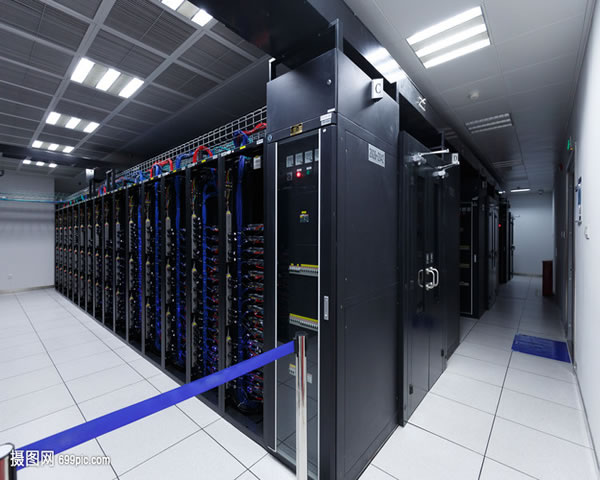
A Must-read List And Process For German Volkswagen Server Maintenance Inspections For Newbies To Operation And Maintenance
the german volkswagen server maintenance inspection checklist and process for novice operation and maintenance covers key steps such as preliminary preparation, hardware and environment inspection, system and network verification, backup and security, logs and alarms, helping to standardize daily operation and maintenance work. -

Summary Of Best Practices In Cabinet Layout And Cable Management From German Computer Room Technology
it summarizes the best practices of german computer room technology in cabinet layout and cable management, covering layout principles, cable routing, airflow management, power supply and monitoring, and is suitable for data center design and operation and maintenance optimization. -

Comparative Advantages Of German Server Hosting Compared To Other Regions
this article explores how german server hosting compares to other regions, including aspects such as data security, network performance, and compliance.