Introduction: Why Prioritize Contracts and SLAs
When choosing a high-security CN2 server in Hong Kong, the contract terms and Service Level Agreement (SLA) directly affect business continuity and security. A proper understanding of the terms can reduce risks, clarify the responsibilities of both parties and the compensation mechanisms, thereby ensuring there is an actionable basis for rights protection and service commitments in the event of DDoS attacks, link failures, or hardware malfunctions.
Scope of Contract and Service Content
The contract should specify the server specifications, CN2 network nodes, upstream and downstream bandwidth, traffic cleaning capabilities, as well as additional management services. Provide written explanations for tasks such as maintenance frequency, patch updates, and migration support to avoid misunderstandings arising from verbal commitments. Also specify the conditions for the contract to come into effect, be amended, and be terminated, as well as the methods of notification between the parties.
SLA availability and performance metrics
The SLA should specify network availability (such as monthly or annual uptime), average time to repair (MTTR), packet loss and latency thresholds, as well as the conditions for initiating traffic cleaning. It is also necessary to confirm the monitoring criteria, measurement methods, and abnormality identification procedures, so that claims or service compensation can be initiated under the contract if the commitments are not met.
Definition of Safety Responsibilities and High-Level Protection Capabilities
High defense capabilities need to be quantified, such as the number of concurrent connections, the peak cleaning traffic volume, and the scope of protection strategies. The contract should clarify the boundaries of responsibility for customer application security and infrastructure protection, and outline the collaboration mechanisms and reporting procedures for third-party attacks, zero-day vulnerabilities, or internal and external threats.
Fault Response, Upgrade, and Compensation Terms
The terms must specify fault classification, response time limits, on-site support or remote processing procedures, as well as upgrade plans and advance notice periods. The compensation mechanism should include service credits, refunds, or other forms of compensation, and clearly define the triggering conditions and calculation methods to ensure that customers’ rights are protected in case of service disruptions.
Data protection, backup, and compliance requirements
The contract should specify data ownership, backup frequency, backup retention period, and recovery procedures, as well as the supplier’s responsibilities regarding privacy protection and compliance (such as requirements for local data storage and cross-border data transfer). It is recommended to clarify the provisions regarding log retention and audit coordination to meet security review and legal compliance requirements.
Summary and Purchasing Recommendations
When purchasing a high-security CN2 server in Hong Kong, contract terms and SLAs should be the primary basis for decision-making, with availability, security capabilities, response mechanisms, and compensation clauses being compared item by item. It is recommended to conduct technical tests and obtain written confirmation before signing a contract. Keep records of any changes, and specify breach of contract and dispute resolution mechanisms in the contract to ensure long-term stable operation and business continuity.
- Latest articles
- Evaluation Of The Impact Of Partner Selection On US Companies’ Entry Into Japanese Server Projects
- Practical Guide And Advice On Choosing The Most Stable PUBG Server In South Korea
- How Does Cross-border Business Use Cloud Servers? Singapore Servers Improve Access Experience
- How To Enter The Vietnam Server Now? A List Of Graphic Steps And Common Misunderstandings That Even Beginners Can Understand.
- How Does An Enterprise Choose A Hosting Plan That Supports Multiple IPs For US Site Group Servers?
- Looking At The Stability And Compliance Requirements Of Cross-border Transactions From The Futian Hong Kong Station Group Server
- Evaluate The Compliance Certificate And Protection Capabilities Of US Cloud Rental Servers From A Security Perspective
- Purchasing Advice Hong Kong Vps Cloud Server 8 Core How To Choose The Appropriate Package According To Business Load
- Comparative Analysis Of Computer Room Distribution And Network Interconnection Performance Of Server Companies In Taiwan
- Cost Control Billing Model And Money-saving Tips For Taiwan’s Native IP Server Cloud Server
- Popular tags
-
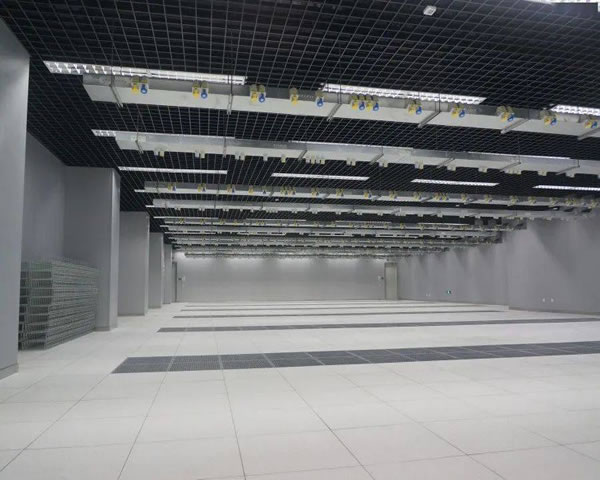
Historical Record Review: Case Analysis Of Hong Kong Nnt Computer Room Address Migration And Expansion
This article is "Review of Hong Kong nnt computer room address migration and expansion case analysis based on historical records". Starting from the background, planning, technical route, risk control and experience and lessons, it provides practical suggestions and summary, which is suitable for SEO reference for data center migration and expansion. -

For IT Teams: What Does “Hong Kong-native IP” Mean And What Is Its Value In Network Security Protection?
Guide for IT Teams: It explains the meaning of Hong Kong’s native IPs, their value in network security protection, and practical recommendations, including key points on compliance, detection, and deployment, to help enhance protection and response capabilities in the Hong Kong environment. -

Deployment Guide Teaches You To Optimize Cdn And Security In Tencent Lightweight Cloud Hong Kong Native Ip Environment
this deployment guide focuses on the native ip environment of tencent lightweight cloud hong kong. it systematically explains how to optimize cdn and security, including practical suggestions such as network planning, origin site deployment, caching strategy, https and ddos protection, monitoring and drills.