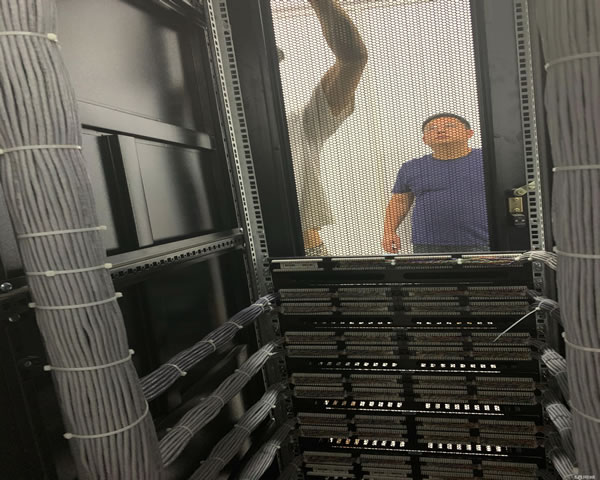
Monitoring and Alarm Practices: CN2 Japan’s Delay Anomaly Detection and Automated Handling Solution aims to provide operational and maintenance teams with actionable detection and automated response processes. This article proposes practical methods and considerations for the CN2 Japan link, covering monitoring design, delay anomaly detection, automated handling, and verification optimization, to help improve fault response speed and network stability.
Design Principles for Surveillance Systems
Design principles should focus on coverage, accuracy, and operability. Requires end-to-end probing, along with simultaneous BGP path and traffic monitoring ; Accuracy emphasizes data quality and sampling frequency to avoid excessive alerts ; Operability requires that alerts include diagnostic information and automated triggering conditions to ensure that operations teams can quickly locate the issue and take action.
Delayed Anomaly Detection Method
Delayed anomaly detection should incorporate multi-dimensional signals: Real-time RTT, jitter, packet loss rate, and routing changes. A combination of static thresholds and dynamic baselines is used: static rules are employed to quickly block obvious anomalies, while dynamic models establish baselines based on historical windows to detect deviations. Adding traceroute and BGP updates can help identify the affected areas and failure points.
Implementation of automated processing solutions
Automated processing should be designed with hierarchical responses: The first layer consists of automated short-term mitigation actions, such as switching to a backup exit, adjusting detection frequency, or temporarily scheduling traffic ; The second layer involves linking work orders with alarm escalations to trigger manual intervention by users with higher permissions. All automatic actions must include rollback and cooldown periods to prevent accidental triggering that could cause cascading failures.
Special Considerations for CN2 Japan Delay Anomalies
For the CN2 Japan link, be aware of international egress congestion, ASN interconnection quality, and the time-varying effects of transit points. During measurement, it is necessary to distinguish between domestic prefix transit delays and the last-hop delay within Japan. By combining the routing information provided by the ISP with active probing data, it is possible to determine whether the issue lies with the link or with the peer device, thereby avoiding misdiagnosis as a problem within the local network.
Alarm Policies and Suppression
Alarm policies need to balance sensitivity and reliability. Adopt multi-indicator fusion triggering, short-term suppression, and repeated alarm compression to avoid alarm storms ; And it aggregates related events through alarm grouping and context association (such as the same ASN or the same path) to reduce noise and improve operational efficiency.
Monitoring Metrics and Data Collection
Key metrics include RTT quartiles, jitter, packet loss rate, number of path hops, and BGP update frequency. Data collection should support high-frequency active probing and sampled passive traffic analysis to ensure time alignment and labeling (such as exit points, target prefixes, ASN), providing an auditable data link for anomaly detection and root cause analysis.
Testing and Continuous Optimization
Optimize driven by SLOs and experiments after implementation: Define delay SLOs and evaluate alarm hit rate, false positive rate, and processing time. Regular chaos testing and regression verification are conducted, with thresholds and automation strategies adjusted based on the consequences of alerts, thus creating a continuous improvement loop to enhance the reliability and maintainability of monitoring.
Summary and Recommendations
Summary and Recommendations: Building a monitoring and alarm system for CN2 Japan requires a closed loop that encompasses design, detection, automation, and verification. Prioritize ensuring data quality and multi-source verification, adopt hierarchical automation while retaining rollback mechanisms, and combine regular drills with SLO assessments to reduce operational costs while improving response speed and user experience.
- Latest articles
- Practical Recommendations for Selecting Bandwidth and BGP Multi-Path Strategies in U.S. Independent Server Hosting Networks
- How small and medium-sized enterprises can identify suitable Hong Kong-based cloud server brands and service quality
- Methods to Improve the Appeal of My World German Server Names from a Player’s Perspective
- Impact Assessment of Cai Xukun’s Hong Kong Event on Brand Exposure through Social Media Sharing
- Step-by-step guide for beginners to set up a dial-up VPS in Cambodia and troubleshooting common issues
- Content Distribution Acceleration: Best Practices and Caching Strategies for Direct Connections to Japanese CN2 Servers
- How to Choose the Right High-Bandwidth and Cost-Optimization Strategies for Corporate Use of Hong Kong-Based IPs
- Price Comparison of Alibaba Cloud’s Japanese Servers: Cost and Performance Differences Among Domestic and Overseas Cloud Providers
- The Celebrity Effect: An Analysis of the Insights from Cai Xukun’s Hong Kong Concert Discussions on Fan Marketing
- Developer’s Perspective on Vietnam’s Reliable Cloud Server APIs and Technical Support Experience
- Popular tags
-

budget and brand recommendations for buying a server in japan
understand the budget and brand recommendations for purchasing servers in japan to help you choose suitable server equipment. -
mc japanese server address recommendations and game experience optimization suggestions
explore the best mc japanese server address recommendations and get game experience optimization suggestions to help players enjoy the fun of minecraft. -
Frequently Asked Questions: Mobile Phones, Japanese Proxy Servers, Reasons for Slow Connections and Solutions
Frequently Asked Questions: Common reasons for slow speeds when connecting a phone to a Japanese proxy server and feasible solutions. Includes network, routing, device settings, application configuration, and troubleshooting steps to help quickly locate and fix issues.