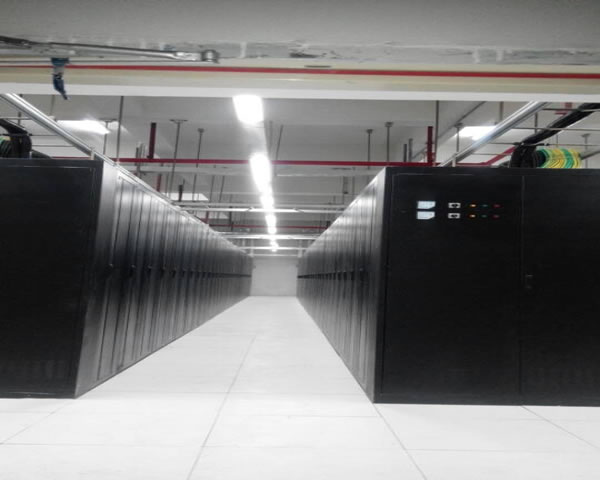
Introduction: When selecting a US server farm for multi-region deployment, the decision should be based on key indicators such as access speed, stability, network interconnection and compliance. This article takes "Comparison of Advantages of Which U.S. Server Station Group Is Better When Deployed in Multiple Regions" as the theme, systematically analyzes various advantages, and helps optimize overseas layout and SEO strategies.
Overview and applicable scenarios of US server sites
A server farm in the United States usually refers to an architecture in which multiple nodes are deployed in different computer rooms or computer room clusters in the United States. Suitable for sites targeting the Americas, cross-continental business, global CDN back-to-origin, or requiring distributed access control. The site group facilitates flexible expansion, distributes traffic on demand, reduces the impact of single points of failure, improves international user experience and cooperates with GEO delivery strategies.
Core value of multi-region deployment
Multi-regional deployment not only solves the problem of geographical delay, but also enables nearby traffic access, partitioned traffic management and disaster recovery switching. By deploying points in different cities or computer rooms in the United States, routing selection and direct backbone network connections can be optimized to maintain availability and response speed during peak traffic or network fluctuations, and improve overall service quality and user retention.
Comparison of latency and access speed
Deploying nodes on the East, West Coast, and Central United States can significantly shorten the average latency for users across the Americas. Choosing a computer room with good network interconnection can reduce BGP hops and packet loss rates, improve page time to first byte (TTFB) and overall loading speed, and have a direct positive impact on SEO, especially the natural ranking and conversion rate for American users.
Stability and Disaster Tolerance
The station group achieves disaster recovery through cross-machine room deployment and load balancing. When a single node fails, traffic can be quickly switched to reduce service interruption time. Combining health checks and automatic expansion strategies can maintain business continuity when traffic surges or hardware fails, improve SLA achievement rates, and reduce operation and maintenance risks. This is an important stability dimension in determining "which US server farm is best for multi-region deployment?"
Analysis of network and bandwidth advantages
When choosing a computer room in the United States, you need to pay attention to the uplink bandwidth, backbone direct connection, and peering. A high-quality network can reduce the cost of cross-ocean return to origin and improve the stability of return to origin. In addition, multi-region deployment is conducive to dispersing bandwidth requirements, avoiding single-point bandwidth bottlenecks, and ensuring concurrency and user experience for high-traffic services such as video and downloads.
Compliance and data sovereignty considerations
Although the regulatory framework for data activities in the United States is different from that in other regions, data storage, transmission, and user privacy compliance needs should still be evaluated before deployment. When choosing a suitable computer room, you need to consider legal compliance, log storage, and access control policies at the same time to ensure that relevant regulatory and customer trust requirements are met when achieving the goal of "comparing the advantages of U.S. server station clusters when deployed in multiple regions."
Practical impact of SEO and GEO optimization
Multi-regional deployment can improve search engines’ judgment of the site’s regional relevance through localized IP, fast response and more stable access, which is beneficial to the natural ranking of GEO traffic. Combining a reasonable CDN, site group subdomain name strategy and localized content can improve search visibility and conversion rate in the target region, but care must be taken to avoid indexing problems caused by duplicate content and improper jumps.
Technical suggestions for choosing a US server farm
It is recommended to evaluate suppliers from four aspects: network interconnection, computer room location, scalability and operation and maintenance support. Priority is given to solutions that provide flexible IP segments, load balancing, monitoring and alarming, and cross-machine room snapshot backup functions. Test latency and packet loss, review compliance terms, and set up comprehensive CDN and caching strategies to achieve stable and efficient multi-region deployment.
Summary and suggestions
Summary: To judge "Which US server station group is better in multi-region deployment and compare its advantages" should take into account delay, stability, network interconnection, compliance and SEO impact. It is recommended to first conduct an assessment of traffic and user distribution, pilot different computer rooms as needed, and iteratively optimize the deployment strategy through monitoring data, and finally select a site cluster solution that can provide a transparent network, flexible expansion, and strong operation and maintenance support.
- Latest articles
- Popular tags
-

Network Solution For Small And Medium-sized Enterprises: Backup And Redundancy Design To Avoid Telecommunications Failure To Connect To Us Servers
network solutions for small and medium-sized enterprises, introducing how to avoid the risk of telecommunications being unable to connect to us servers through backup and redundancy design, including link redundancy, sd-wan, bgp, dns/cdn, monitoring and security strategies. -

Practical Tips For Getting Server IP Address In The United States
Learn practical tips on how to obtain server IP addresses in the United States to improve your network security and data transfer efficiency. -